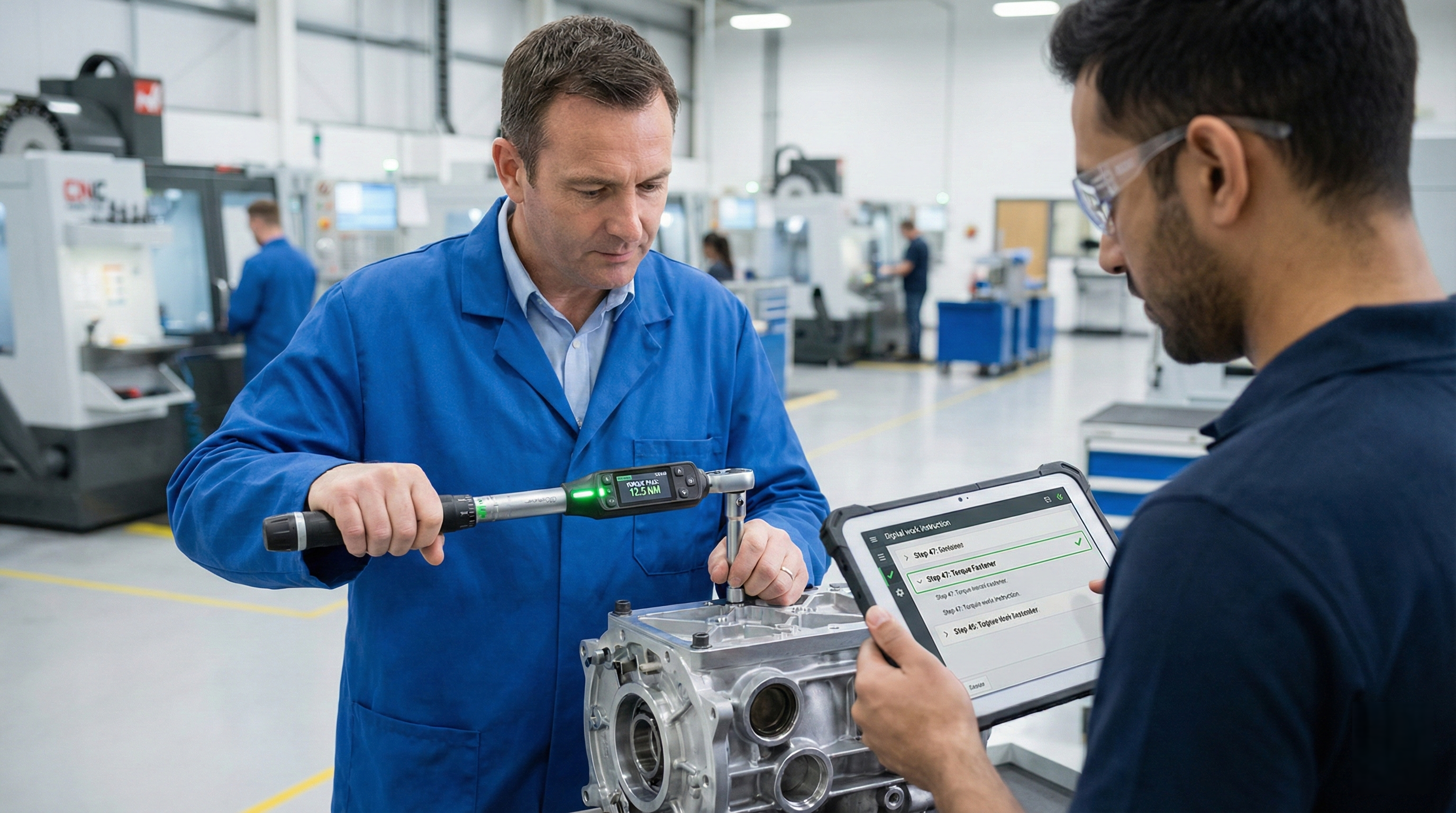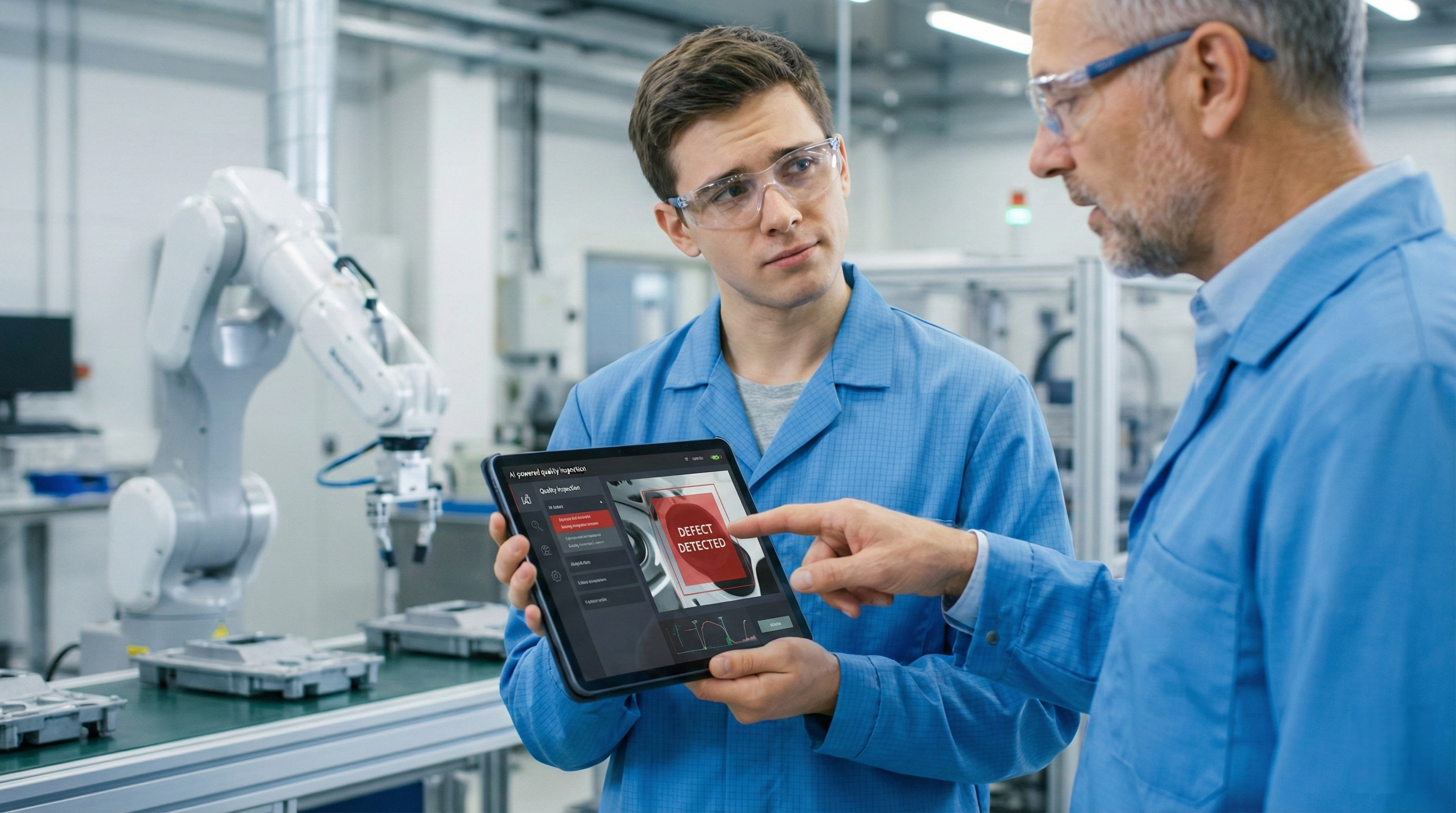
A continuous improvement manager at an automotive tier-1 told me this story over coffee at a trade show. They'd gone all-in on Augmentir. Full deployment — digital work instructions, skills matrix, the AI engine analyzing every interaction. The system had profiled each worker, categorized them by proficiency level, and was dynamically adjusting which instructions each person saw.
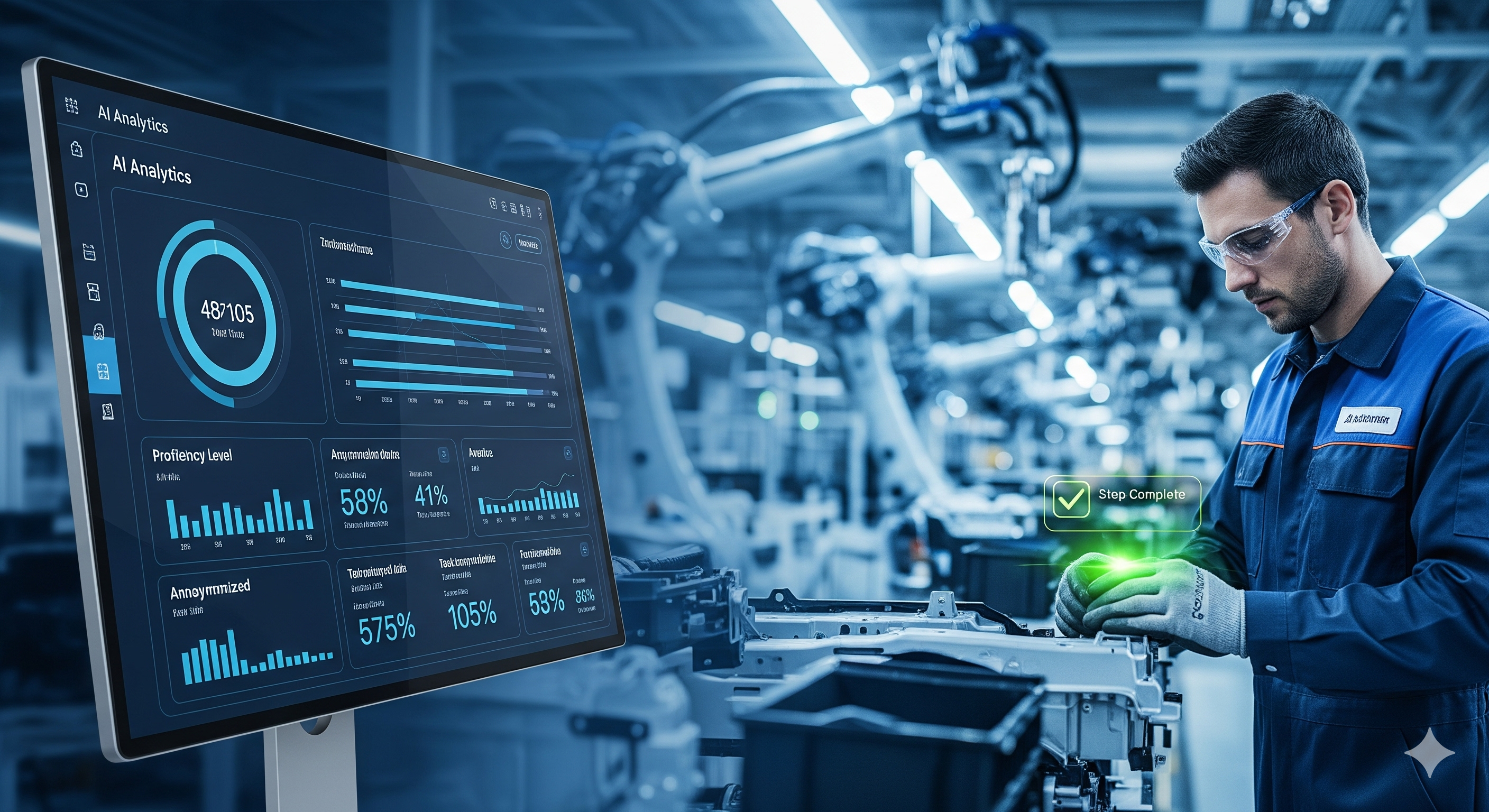
Their AI dashboard was a thing of beauty. Color-coded skills matrices. Performance trends. Predicted training needs. The system had flagged that a particular operator on their brake assembly line was "intermediate" and had automatically simplified his work instructions accordingly.
That operator still installed a caliper bracket backwards. Recall. 8,000 vehicles.
The AI had correctly assessed the worker's proficiency level. It had served him the right content for that level. Every metric in the system was green. The algorithm worked perfectly.
It just didn't check whether he could actually do it.
Why You're Looking for Augmentir Alternatives
Let's cut to it.
It's the implementation. Augmentir is enterprise software that behaves like enterprise software. Long sales cycles. Complex deployment. You need a dedicated team just to get it configured. Six months in, you're still "rolling out."
It's the price. Connected worker platforms at the enterprise tier run $100K+ per year. That's a lot of budget to justify, especially when the floor is still doing what the floor was always doing.
It's the AI promise vs. reality. The pitch is compelling — machine learning that gets smarter over time, personalizing the worker experience. In practice, the AI needs clean data, consistent usage, and time. Most plants get noisy data, inconsistent adoption, and impatient leadership.
It's the sneaking suspicion that you're paying for a very sophisticated content recommendation engine. Like Netflix, but for torque specs.
So you're looking at Augmentir competitors. Let me save you some time.
The Honest Comparison
If you want a different connected worker platform, here's what's actually worth evaluating:
Dozuki — Mature documentation platform. Strong revision control, good for regulated environments. No AI magic, but the authoring workflow is proven. Can feel heavy for what it is.
Poka — Factory social network meets work instructions. Strong floor adoption because workers actually like using it. Less analytics depth than Augmentir.
SwipeGuide — Lean and mobile-first. The opposite of enterprise complexity. Good for one-point lessons. Won't match Augmentir's feature set, but your team might actually use it.
VKS — Visual Knowledge Share. Solid, no-nonsense work instructions for discrete manufacturing. Data capture at each step. Straightforward.
Tulip — The platform play. Build custom apps for your operations. Powerful if you have the technical resources. Can get expensive and sprawling fast.
All legitimate products. Each with a different angle on the same fundamental job: getting the right information in front of workers.
If Augmentir's complexity is your problem, look at SwipeGuide or Poka. If it's price, evaluate the mid-market options. If the AI never delivered the insights you were promised, consider whether you need AI at all — sometimes a well-built SOP beats a personalized one.
But here's where I have to be honest with you.
Give Credit Where It's Due
Augmentir's core insight is genuinely smart. Not every worker needs the same level of instruction. A 20-year veteran doesn't need the same step-by-step detail as someone in their first week. Using AI to adapt content to proficiency level is a real idea solving a real problem.
Their skills tracking is more sophisticated than most competitors. The analytics go deeper. The concept of a "digital workforce intelligence" layer that learns from worker interactions — that's forward-thinking.
I mean it. The thinking behind Augmentir is some of the most interesting in the connected worker space.
Here's the uncomfortable part.
Personalized Viewing Is Still Just Viewing
Augmentir's AI optimizes which content a worker sees and how detailed that content is. It personalizes the delivery. That's the innovation.
But personalized delivery is still delivery. The AI decides what to show you. It doesn't verify you can do what it showed you.
Think about what the system actually measures. It tracks that the worker opened the instruction. It records how long they spent on each step. It notes whether they marked it complete. It feeds all of this into the ML model to refine the worker's proficiency profile.
Every data point is about content consumption. Not one is about task execution.
The AI might determine that Worker A is "advanced" at a particular procedure based on how quickly they move through the digital instructions. But speed of clicking through steps isn't proficiency. It might just be familiarity with the interface. Or impatience. Or a guy who figured out that tapping "next" fast enough gets the system off his back.
Augmentir's AI is optimizing a proxy metric. A sophisticated proxy metric, wrapped in machine learning, displayed on beautiful dashboards. But still a proxy.
The Gap No Algorithm Closes
This isn't an Augmentir problem. It's a category problem.
Every connected worker platform — AI-powered or not — sits on the same assumption: that consuming the right content leads to correct execution. Augmentir just made the content consumption smarter.
But the gap between "received personalized instruction" and "can perform the task correctly" isn't a content problem. It's a verification problem. And no amount of AI personalization closes it.
When your quality team investigates that backwards caliper bracket, they'll find a system that worked exactly as designed. The AI assessed the worker accurately. The content was appropriately tailored. The worker engaged with it. Everything upstream was optimized.
The downstream reality — the actual physical task — was never checked.
What the Missing Layer Looks Like
The piece that's absent from every Augmentir alternative — Augmentir included — is validation. Not "did they see the right content?" but "can they do the thing?"
AI manufacturing training today optimizes the input. What's missing is verification of the output.
Documentation says: "Here's how to do it."
AI personalization says: "Here's the version calibrated to your level."
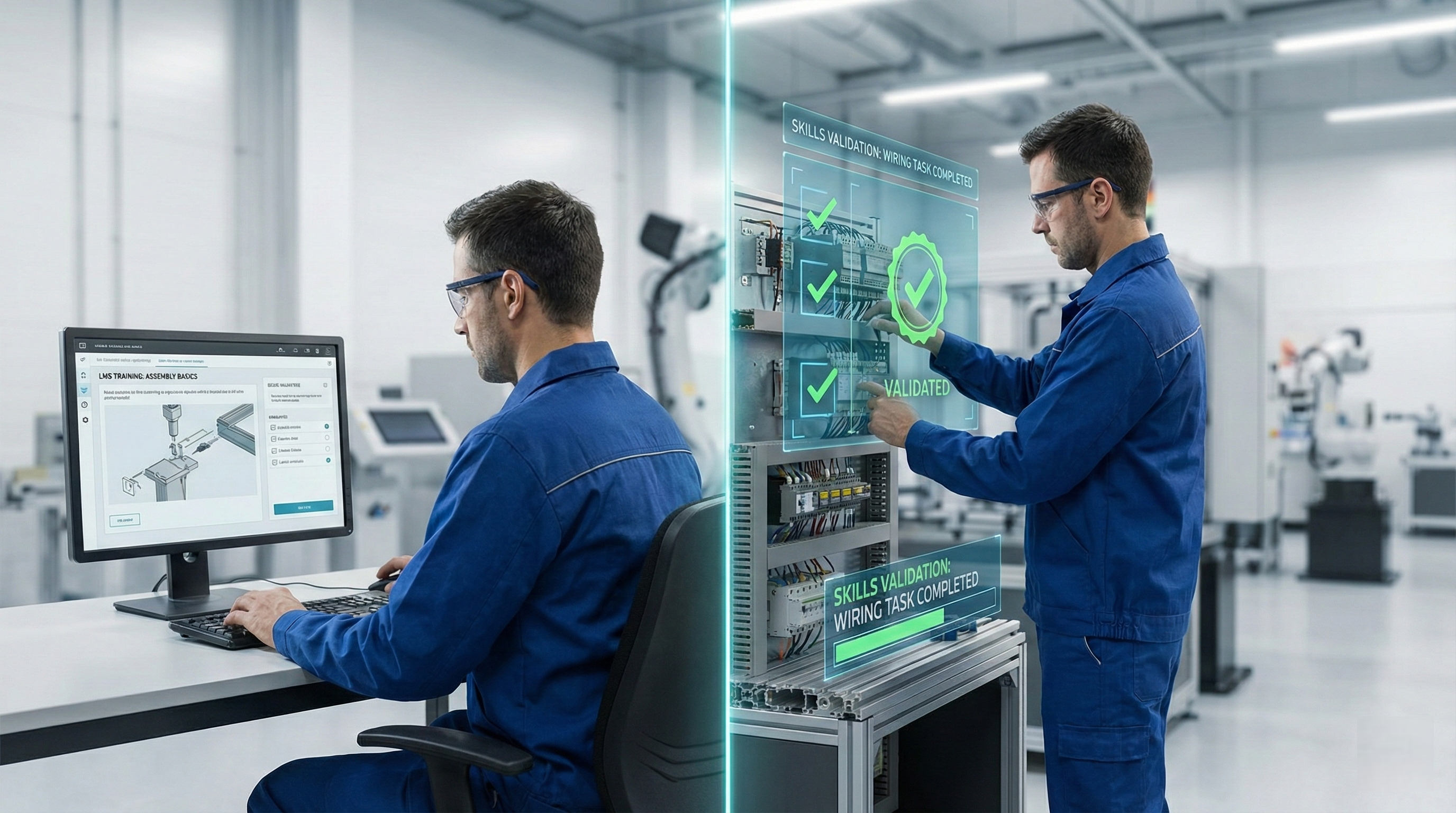
Validation says: "Show me you can do it."
That third layer doesn't replace the first two. You still need good SOPs. You might even want AI-powered delivery. But without validation, you're building a very smart system on top of an assumption.
So What Should You Do?
If Augmentir's complexity, cost, or implementation timeline is the problem — switch platforms. The list above is solid. Pick based on what your floor team will actually adopt. The best connected worker platform is the one that doesn't collect dust.
But if you're switching because the AI insights didn't translate to fewer errors on the line — if the skills matrix says "proficient" but your reject rate says otherwise — then no alternative in this category fixes that. You'll implement a new platform and have the same gap between what the system says and what the floor does.
The question isn't which AI personalizes content best. It's whether personalized content is enough.
Different question. Different answer entirely.
If that question sounds familiar, try skillia. Build 5 SOPs with built-in skills validation — free, no credit card. See what happens when "proficient" actually means something.